

INTRODUCTION
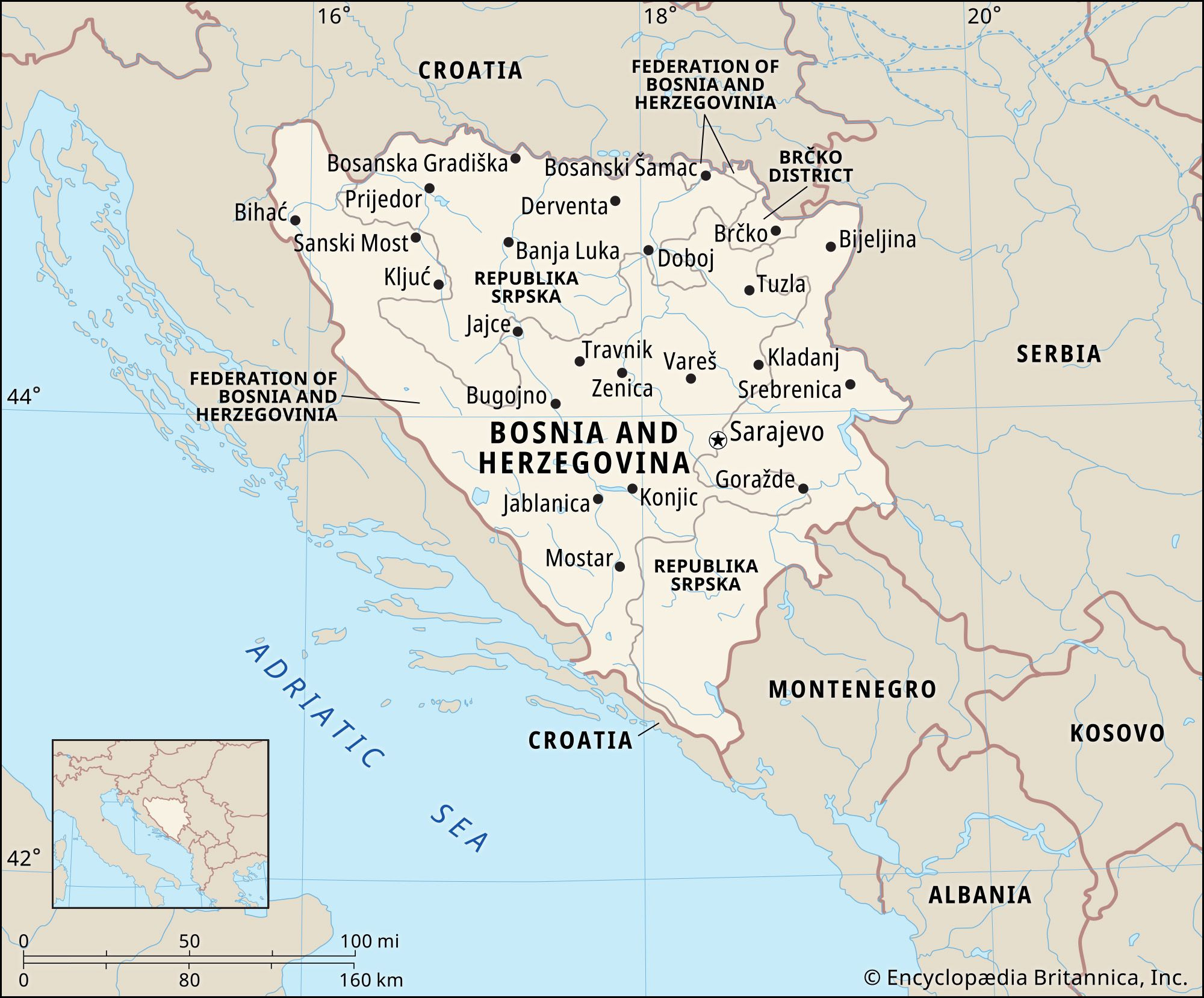
Bosnia and Herzegovina, located on the western Balkan Peninsula in Southeast Europe, is a country with a very complicated past. Following the collapse of Yugoslavia, Bosnia’s War broke out in 1992 and lasted until 1995. It remains one of the most brutal, complex, calculated and devastating conflicts to have occurred in post-World War II Europe. The war was characterized by intense ethnic nationalism, ethnic cleansing, and deep fears on all sides after many years under Josip Broz Tito’s authoritarian regime. With the strong power vacuum that followed Tito’s death, Serb forces launched a powerful ethnic cleansing campaign aimed primarily at Bosniak Muslims while also targeting the Catholic Croats. The Serbs’ campaign included mass deportations around the country, genocide, a siege of Bosnia’s capital, Sarajevo, extreme sexual violence, and the use of concentration camps. Many of these tactics shocked the international community as they reminded them of the strategies used by the Germans during the Holocaust.
UNDERSTANDING THE CONFLICT
The collapse of Yugoslavia: dissolution, ethnicity and chaos
Yugoslavia’s dissolution was driven, among other factors, by political instability, the country’s economic decline and the rising of ethnic nationalism. Josip Broz Tito, the former president of Yugoslavia, died in 1980. His death contributed to the end of the era of Former Yugoslavia. This meant the member states of Yugoslavia “(Slovenia, Croatia, Macedonia, Bosnia, and Herzegovina, Serbia and Montenegro, and two autonomous states (Kosova and Methohia) could not have peaceful and tolerable relations anymore”.1 Tito’s authoritarian rule kept the country’s ethnic and nationalist tensions under control. Following his death, the lack of clear authority and leadership in Yugoslavia’s government created insecurity throughout the country.
The collapse of communism in Eastern Europe in 1989 further perpetuated the growing conflict in Yugoslavia. The U.S. Department of State claimed “the absence of a Soviet threat to the integrity and unity of Yugoslavia and its constituent parts meant that a powerful incentive for unity and cooperation was removed”.2 This dynamic was accompanied by an economic and social depression, which completely collapsed the economy, adding to tensions between the states. As early as 1985, the Serbian Academy of Sciences had already drafted a memo in which they accused Tito and the Party state of creating anti-Serb policies for the past three decades. Political scientists Kalyvas and Sambanis expanded on this in asserting that “the Academy blamed these policies for regional disparities in income and accused the Albanian majority in Kosovo of ‘genocidal’ anti-Serb policies”.3 Ethnic nationalism was growing quickly.
In 1991, both Slovenia and Croatia declared their independence from Yugoslavia. Their departure signaled the collapse of the federation of six states that had formerly made up Yugoslavia. Slovenia and Croatia’s independence triggered a military conflict between the Yugoslav People’s Army (JNA), which was dominated by the Serbs, and their newly independent neighbors. The Serbs sought to control Yugoslavia under Slobodan Milošević’s leadership and were against the secession of Croatia and Slovenia. The protection of ethnic Serbs was also a crucial component in their opposition to these independence movements. Serbian leaders claimed that Serb populations in both Croatia and Slovenia would be endangered by the new republic’s independence movements. They used these claims to justify their military intervention in those regions. However, Slovenia and Croatia wouldn’t be the only former states to suffer from Serb violence. Bosnia and Herzegovina was another tragic battleground for the Yugoslav Wars in which the Serbs took extreme action in attempts to secure their power in Yugoslavia’s former states.
It is important to consider the ethnic composition of Bosnia at the time and its role in the Bosnian war. The Republic of Bosnia and Herzegovina was made up of 43.7% Bosniaks (Muslim), 31.4% Serbs (Orthodox Christian) and 17.3% Croats (Catholic). The Bosnian Serbs were concerned that they would become minorities of a hostile state if Bosnia became independent. Serbian nationalists rallied under Radovan Karadžić, the leader of the Serb Democratic Party (SDS), and Slobodan Milošević, the Serbian president based in Belgrade. Bosnian Croats and Bosniak Muslims, however, feared that if they did not secure their independence they would be oppressed by a Yugoslavia under Serb control. These fears come from a social and psychological phenomenon known as siege mentality. This is why “the Serbs of Bosnia, the argument runs, did not wish to secede from Yugoslavia and made their wishes clear by boycotting the referendum which put the question of independence to vote in Bosnia in March 1991”.4 Unfortunately, the Bosnian parliament had declared its independence without having done the “adequate preparations to secure or defend it”.5 Some argued that in doing so, they had violated the established political norms of Bosnia and Herzegovina by which it was necessary to receive consent from all three of its largest ethnic communities for any constitutional change made in the Republic, therefore inviting its own destruction by the wrath of the Serbs. Bosnia attempted to secure its political, territorial and cultural autonomy so as not to be absorbed into Serbia. At this point, Bosnia’s declaration of independence was to the Great Serb bloc made up of Serbia and Montenegro, which was masquerading as ‘Yugoslavia’. The recognition of Bosnia and Herzegovina’s independence by the European Community opened the doors to genocide involving systemic, organized killing and expulsion of non-Serbs living in Serb-held areas. Bosnia and Herzegovina declared independence on March 1, 1992, under the leadership of Alija Izetbegović. He was the first president of the newly independent state and the Bosnia and Herzegovina (BiH) Government, the internationally recognized government during the conflict. War broke out within the month.
The conflict escalated quickly from this point on as the Serbs began to use ethnic cleansing tactics. Kalyvas and Sambanis explain that “mass deportation in Bosnia was initiated by the Serbs in April 1992 and became common practice throughout the war, practiced by all sides to varying degrees. It was first used in late summer 1991 in eastern Croatia but became most severe in Bosnia”.6 The project for ‘Greater Serbia’ sought “to ‘cleanse’ Bosnia of the Muslims and the cosmopolitanism of its cities which was unique and dangerous to the new ‘pure’ nation states emerging from the ruins of Yugoslavia”.7 Bosnia could be carved into new territories and annexed into the respective national states of ‘Greater Serbia’ and ‘Greater Croatia’ once it had been ‘cleansed’. However, many of the Croats living in Bosnia faced destruction similar to that of their Muslim neighbors and family members. Slovenia and Croatia’s independence had left Bosnia exceptionally vulnerable by escalating ethnic divisions and creating an opportunity for Milošević to draw upon fear and ‘old blood hatred’.
Fetine Yıldırımtürk Bayraktar, “Ethnic Conflict Movements: The Case Study of Bosnia and Herzegovina.” Anadolu ve Balkan Araştırmaları Dergisi 4, no. 7 (2021), 117.
Office of the Historian, Foreign Service Institute, U.S. Department of State. “The Breakup of Yugoslavia, 1990–1992.” Milestones in the History of U.S. Foreign Relations, 1989–1992.
Stathis N. Kalyvas and Nicholas Sambanis, “Bosnia’s Civil War: Origins and Violence Dynamics.” In Understanding Civil War: Evidence and Analysis. World Bank, 2005, 192.
Rabia Ali and Lawrence Lifschultz, “Why Bosnia?” Third World Quarterly 15, no. 3 (September 1994), 374.
Ali and Lifschultz, "Why Bosnia?", 374.
Kalyvas and Sambanis, "Bosnia’s Civil War," 213.
Ali and Lifschultz, 367.
Works Cited
Ali, Rabia, and Lawrence Lifschultz. “Why Bosnia?” Third World Quarterly 15, no. 3 (September 1994): 367–390.
Bayraktar, Fetine Yıldırımtürk. “Ethnic Conflict Movements: The Case Study of Bosnia and Herzegovina.” Anadolu ve Balkan Araştırmaları Dergisi 4, no. 7 (2021): 117–134.
Kalyvas, Stathis N., and Nicholas Sambanis. “Bosnia’s Civil War: Origins and Violence Dynamics.” In Understanding Civil War: Evidence and Analysis, 191–229. Washington, DC: World Bank, 2005.
Office of the Historian, Foreign Service Institute, U.S. Department of State. “The Breakup of Yugoslavia, 1990–1992.” Milestones in the History of U.S. Foreign Relations, 1989–1992. Accessed March 31, 2026.